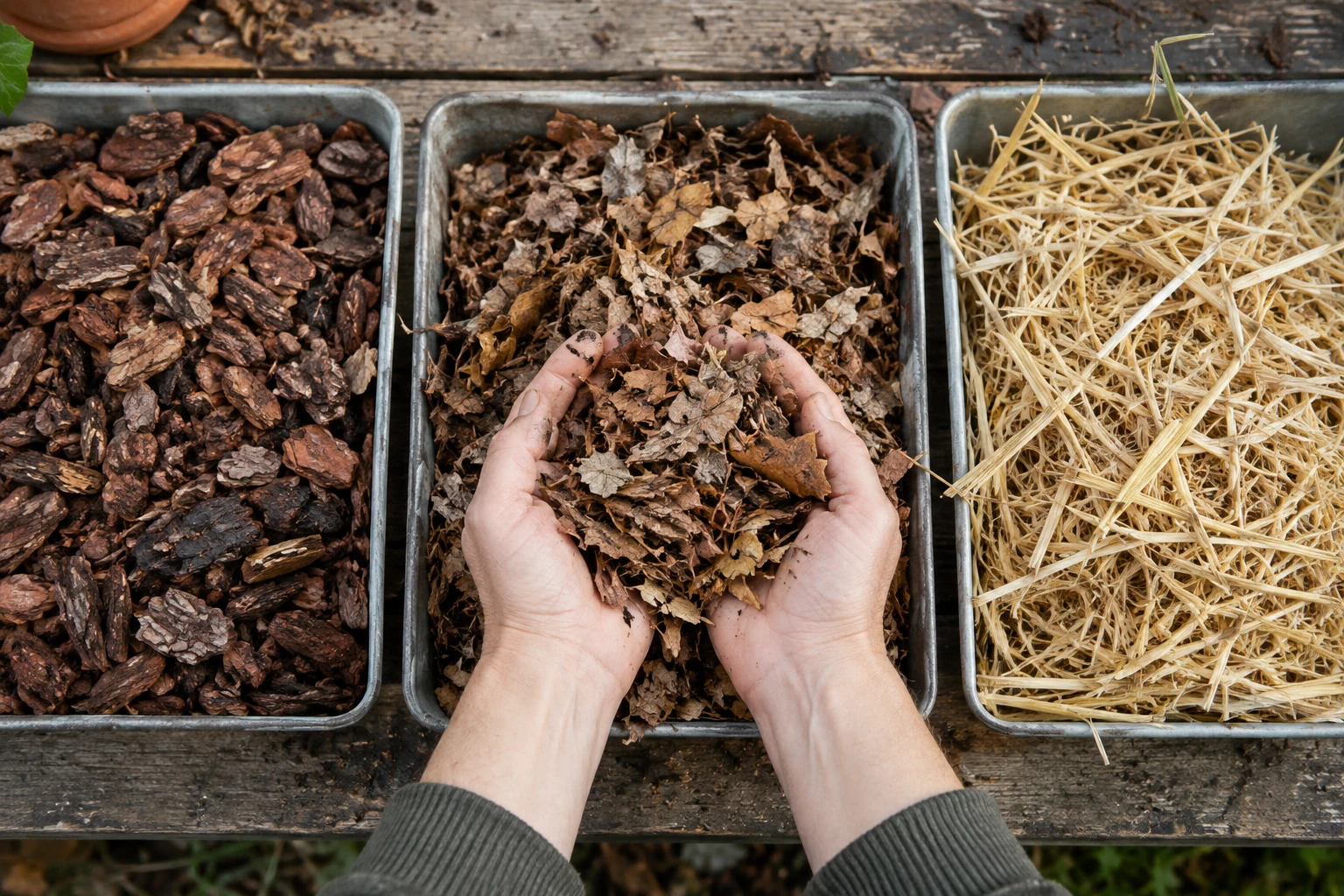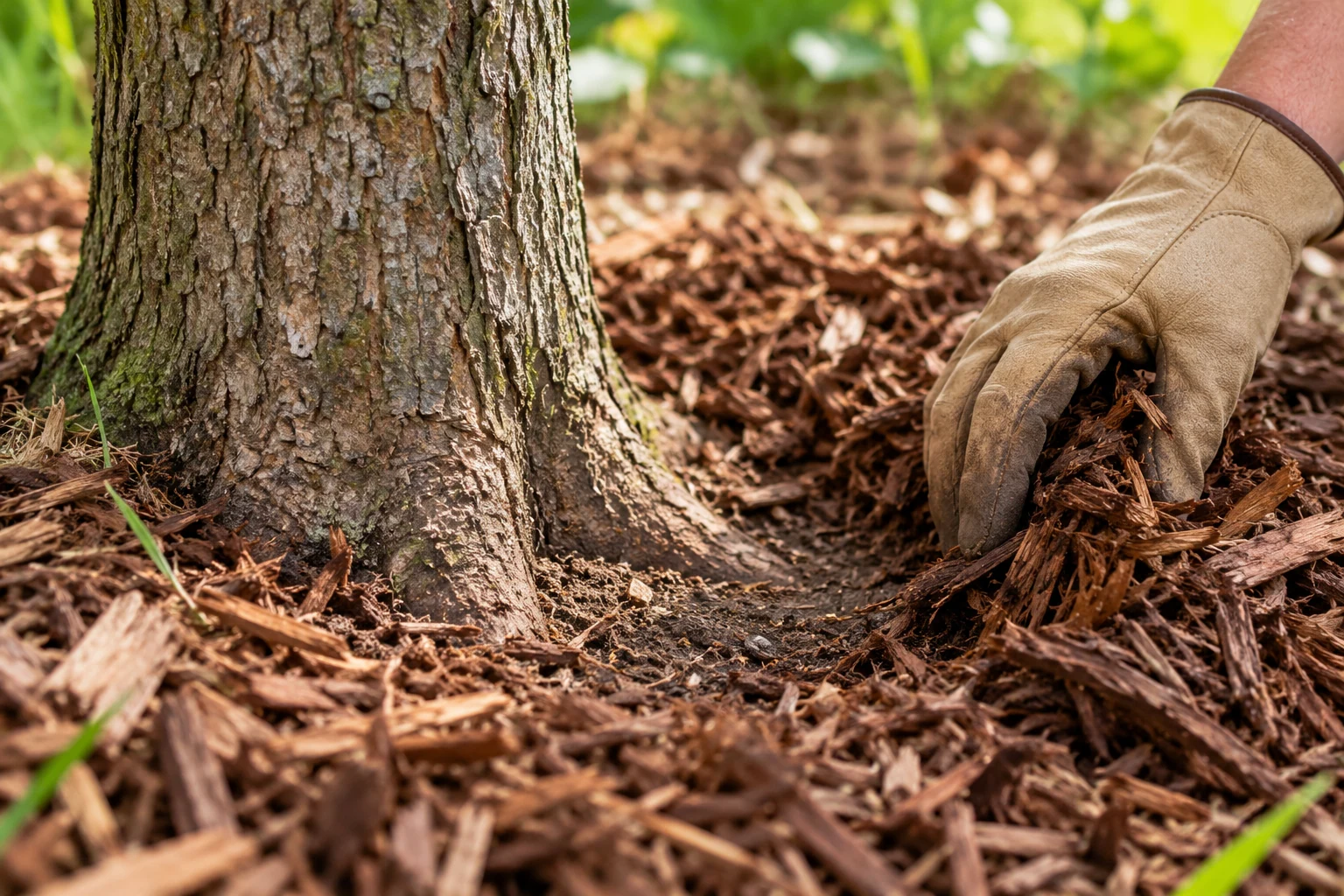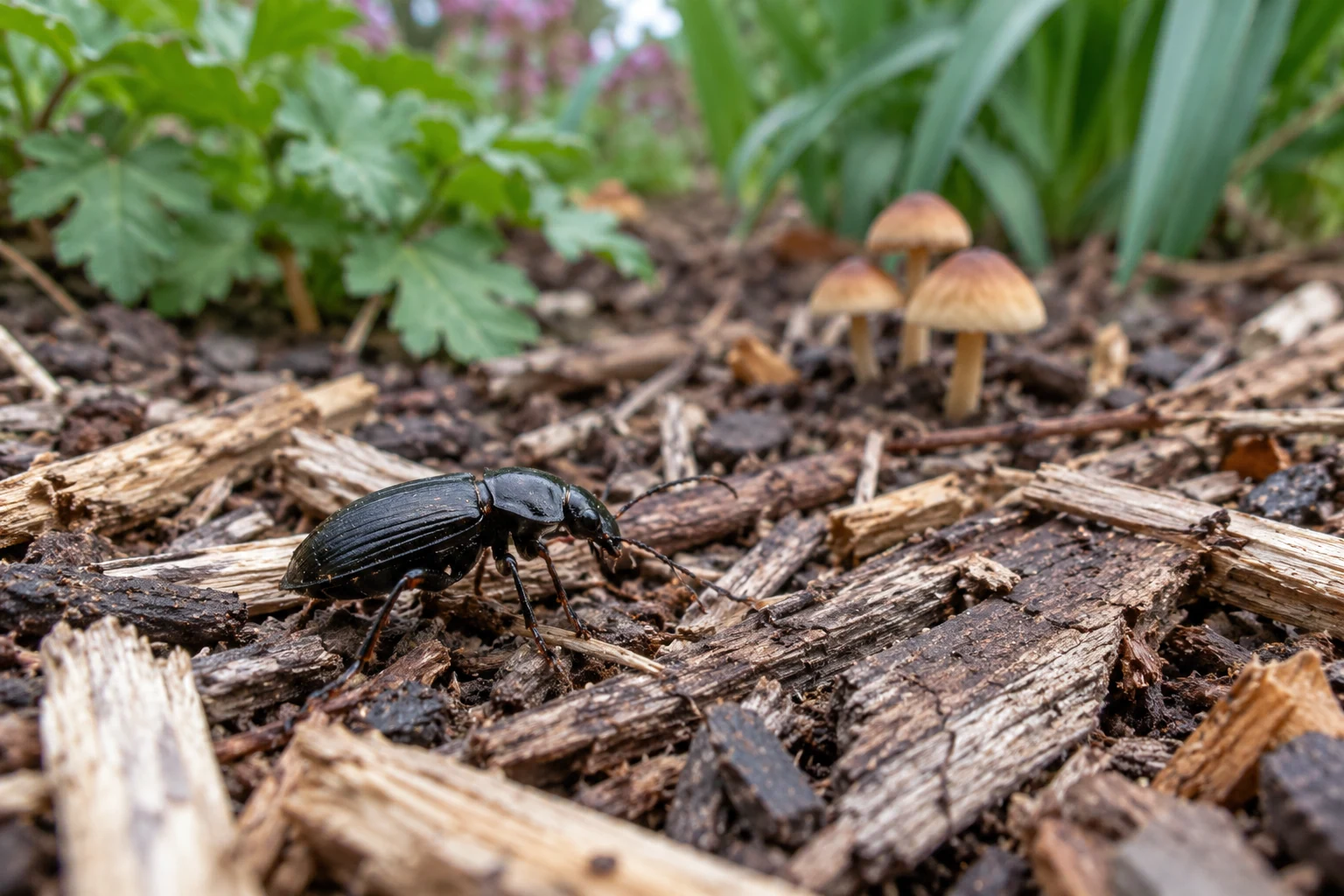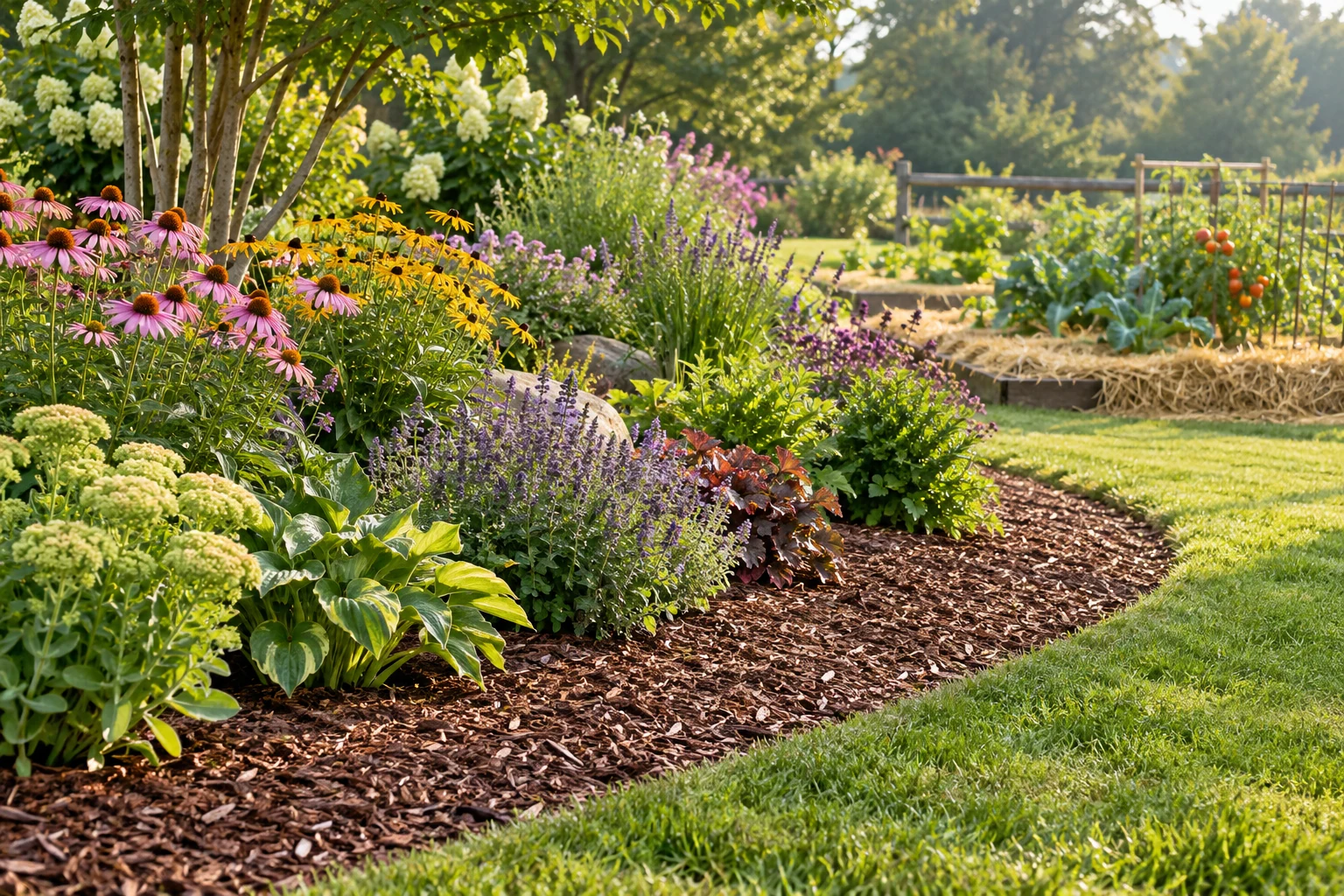
Organic mulch serves several practical purposes in vegetable gardens, flower beds, and landscape plantings. It helps suppress annual weeds, retain soil moisture, moderate soil temperatures, and reduce erosion from rainfall and runoff. By limiting soil splash, it also helps keep produce and flowers cleaner and can lessen some diseases, including tomato blight. Choosing a mulch involves more than appearance. Availability, price, intended use, and how long the material lasts all matter. The most useful choice depends on where you plan to spread it and what you need it to accomplish. ## Start with the planting For trees, shrubs, roses, and perennial beds, begin by considering bark or wood chips. These materials suit landscape plantings, and bark breaks down slowly. Where movement is a concern, shredded wood has an advantage over chips because it is less likely to blow or wash away. For vegetable plots and annual flower beds, consider materials that break down more quickly, such as dried grass clippings or prepared leaves. Shred or compost leaves before spreading them; whole leaves can settle into mats. Let grass clippings dry first for the same reason, and because fresh clippings can develop an odor. Straw offers another option for vegetable beds and strawberries, provided it is free of seeds. It also suits winter protection where matting around plant crowns is a concern. Keep that winter use separate from mulching around trees and shrubs, where straw may shelter rodents. Make the choice by asking what the bed needs most. If improving soil structure and fertility is the priority, compost deserves consideration. If weed suppression is the main goal, remember that compost is less effective at that job than other mulches. ## Set the depth and timing A layer about 2 to 4 inches deep generally works well, although material, soil, climate, and planting age affect the appropriate depth. Fine materials belong toward the shallower end; coarse materials can be deeper. Excessive depth can reduce soil oxygen and encourage waterlogging. Mulch can be applied during the growing season. In spring, wait for soil to warm and perennials to emerge. For late-season protection, wait until plants become dormant. Around woody plants, keep mulch at or below 4 inches and taper it away from trunks. Treat depth as something to check across the bed, rather than judging the application by how much material you have emptied from a bag. A thin covering may leave you replenishing mulch frequently, but adding a thick blanket creates a different set of problems. Match the layer to the texture of the material instead of using the same depth everywhere. At a tree, look closely at the trunk after spreading. Draw the mulch down and away so it does not form a mound against the bark. Constantly moist bark creates conditions favorable to disease and interferes with gas exchange in living trunk tissues. Paper and cardboard require their own approach. Overlap the edges, wet the material, and hold it in place with a covering of organic mulch. Use a restrained number of layers: too much sheet material can obstruct water and air. Break up the sheets after underlying vegetation dies or after several weeks to avoid leaving a lasting barrier. Sawdust also calls for restraint. Use material aged or composted for a year when possible. If it is fresh, keep the layer no thicker than 1 inch and watch for a crust that interferes with water entry. ## Recognize the limitations Rock and other inorganic mulches do not improve soil structure or fertility. Weeds can eventually establish in debris accumulating above them. Landscape fabric beneath organic mulch also fails to keep beds permanently weed-free and makes the mulch more prone to displacement. Poor storage can spoil organic mulch. Large, saturated piles may develop low-oxygen conditions and produce substances harmful to plants. A strong vinegar or silage smell is a warning sign; properly stored mulch smells more like fresh bark or garden compost. Build a brief material check into your routine before spreading anything. Reject sawdust from treated lumber. Remove tape and staples from cardboard, and avoid waxed cardboard or glossy paper. With lawn clippings, consider their history: weed-infested lawns supply weed seeds, and clippings from broadleaf-herbicide treatments should wait until after two or three mowings. Then check the setting. Cocoa shells require close supervision wherever dogs might eat them, because ingestion can cause chocolate poisoning. Beside a house, leave several inches between mulch and the foundation, and keep it from contacting siding or covering windowsills. Once the mulch is in place, interpret what you see before deciding on a response. Many insects living there are harmless or beneficial, so their presence alone is not a reason to remove it. Mushrooms and other decay organisms can appear too; unwanted growth can be raked or scooped away. Continue checking depth, material condition, and clearance around plants as part of ordinary garden care.